AION 2 PvP includes structured matches and faction conflict in the Abyss. Start by choosing the type of fight you want, then prepare your class's control, movement, resource use, and group role for that format.
Fighting another player changes the problem. A person can retreat, switch targets, save a defensive action, or punish a predictable approach. Familiarity with a PvE damage sequence helps you operate the class, but it does not decide when that sequence is appropriate against an opponent who responds.
Choose a format with a clear learning goal
Structured Arena play and open faction conflict ask different things from you. A duel concentrates attention on one opponent. A group match adds ally positioning and shared target decisions. The Abyss adds the surrounding war zone and three-dimensional movement.
Choose the activity that supports the skill you want to learn. If you want to understand an opposing class's approach, a small controlled fight is easier to interpret than a crowded battle. If you want to practice protecting teammates and following calls, join a group with a clear plan.
Mode labels, team sizes, eligibility, and normalization rules can change or differ across regional material. Read the mode shown in the current Global client instead of assuming that every numerical format described in a Korean or Taiwanese guide is available to your character.
| Your immediate goal | A useful type of practice | What to watch |
|---|---|---|
| Learn an opponent's approach | A controlled duel or small encounter | Gap closing, control, retreat, and defensive timing |
| Coordinate with allies | A group format with target calls | Shared focus, support range, and safe positioning |
| Learn aerial pressure | A deliberate Abyss session | Elevation, Flight Power, approach routes, and retreat |
| Play a match objective | A format whose objective you understand | Progress toward victory rather than isolated kills |
Read the actual match rules before queuing
A mode's rules determine what preparation matters. Gear progression and equalized conditions are different environments. Do not assume that a poor result is a gear problem until you understand which character properties the actual mode uses.
Inspect entry requirements, objective descriptions, the result screen, and any current season rules presented by the game. A familiar Arena name is not enough to establish how the mode scores or what carries between stages.
If the objective requires movement, possession, or protecting an area, make that objective part of every target choice. Chasing a weakened opponent away from the useful fight can lose more than the defeat gains. A damage meter or elimination count cannot replace the victory condition.
This guide does not reproduce disputed team counts or a universal PvP unlock level. Use the current client for those boundaries, then apply the combat decisions below to the format you have actually entered.
Give your group roles before the first engage
A useful group plan identifies who calls targets, who initiates, who supports an ally under pressure, and where everyone retreats. These roles can overlap, but they should not remain unspoken until the fight is already chaotic.
A melee damage player may need a safe approach and an exit, while a ranged player needs sight and room to move. A healer needs allies within reach without standing inside every incoming attack. A tank's control can create an opportunity, but teammates must recognize and use that opportunity together.
Avoid treating class labels as complete instructions. Saying that a Cleric heals does not identify where the healer will stand or how the group responds when the healer is pressured. Decide what you will do when a key member becomes the enemy's target.
Begin with a small number of clear calls. Identify the focus target and the retreat position. Add more detail once the group can follow those two instructions reliably.
Plan entry and exit as one decision
Before engaging, look at the opponent's location, nearby allies, and the route back to your group. A successful approach is not just reaching attack range; it also leaves a way to respond when the opponent survives or reinforcements arrive.
Mobility used to enter cannot always be used immediately to leave. Know which movement action you are committing and which one remains. Spending every gap closer to reach a target can turn a short offensive opportunity into a long period of exposure.
Ranged characters should make the same decision from the other direction. Distance is useful only when the space behind you remains safe. Kiting into another group or a blocked route does not preserve an advantage simply because the first opponent is farther away.
When the situation changes, leave deliberately. A target switch or retreat call is part of the fight. Continuing an outdated plan because the opponent has little health can separate you from the support that made the engagement possible.
Recognize control before spending your answer
Crowd control changes when you can act and move. Your response should depend on the actual condition, the enemy's follow-up, and your remaining position rather than the first unfamiliar animation.
Learn your class's control removal and defensive tools in a simple environment. Know which conditions they address and what happens afterward. A tool that removes one category should not be assumed to remove every harmful effect.
Saving an answer forever is as unhelpful as spending it without a reason. If control exposes you to immediate focused damage and your response can create a safe escape, use it deliberately. If the threat is minor and you remain protected, consider whether a larger danger is about to follow.
For your own control actions, confirm that the effect actually applied. Player modifiers and resistance can differ from a monster encounter. A follow-up built on an assumed root, fear, or stun can fail when the opponent remains free to move.
Manage flight as part of combat
The Abyss introduces vertical space and Flight Power alongside ordinary combat resources. Elevation changes approaches and awareness, but sustained flight still requires resource attention. Plan how to leave an aerial fight before the gauge becomes the only thing you can watch.
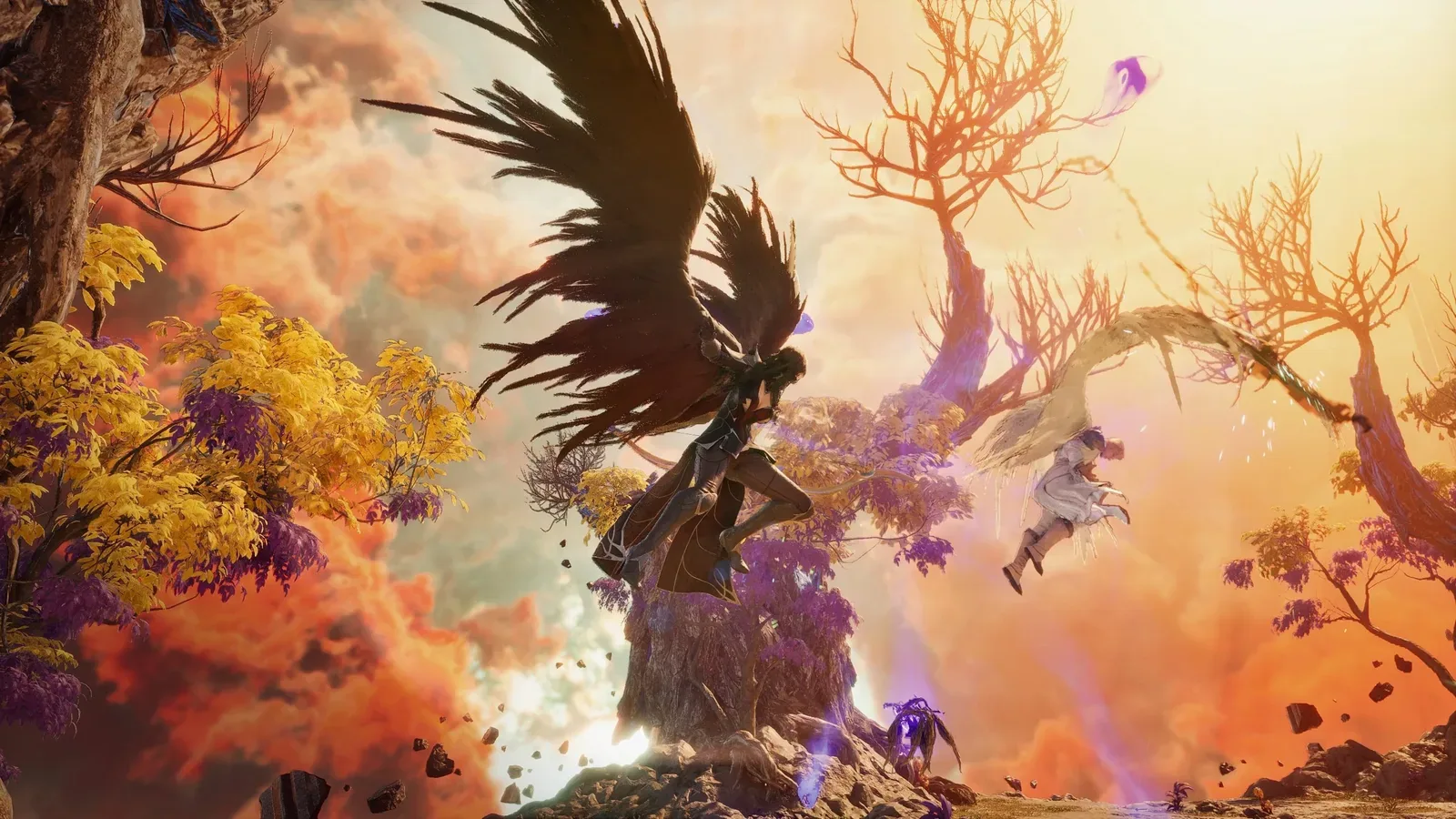
The flight scene illustrates vertical separation; it does not show a verified PvP encounter or Abyss location.
Look around rather than watching only the target directly ahead. An opponent can approach above, below, or from a different island route. A safe ground habit does not cover every direction in an aerial war zone.
Use visible flight facilities and recovery opportunities according to their actual in-game behavior. Do not assume that a remembered route remains safe while an enemy group controls the area. A recovery point can also become a predictable place for opponents to find you.
Before chasing, consider whether the pursuit leaves enough Flight Power for the return and whether your group can follow. The ability to reach the enemy is only half the decision. Being stranded after the target retreats can be more dangerous than ending the chase early.
Protect support without abandoning the objective
When your healer or another essential ally is pressured, help create space. Control, target pressure, and coordinated repositioning can all contribute. The right choice depends on what your class can actually do and where the group needs to move.
Do not force a healer to follow a scattered team in several directions. Stay within the shared formation when practical and recognize that support range is a combat condition. An available heal cannot reach someone who has left its effective area.
Likewise, support players should preserve a useful escape route. Standing in a seemingly safe location that becomes cut off can make the next retreat difficult for the whole group. Follow the group's planned movement while monitoring who still needs help.
After defending an ally, return to the objective deliberately. Peeling an attacker is useful when it restores the group's ability to act. It should not become a new unrelated chase that leaves the original objective undefended.
Separate PvP preparation from PvE habits
Your useful PvP actions may emphasize control, movement, defensive timing, or effects that limit an opponent's recovery. That can change which skill specializations deserve attention compared with a monster damage setup.
Inspect the current skill descriptions for player-specific behavior. Some effects use separate PvP values or condition rules. Do not carry a monster tooltip into a player fight as if both targets are governed by the same numbers.
Use the game's supported presets when they help you distinguish an activity's setup. Before entering, confirm the intended equipment and skills are active. A saved preset is useful only if you can identify what it changes and whether the current activity accepts those changes.
Avoid making every defeat a reason to replace your whole build. First establish whether your input, position, and target plan worked. A different specialization cannot correct repeatedly entering alone after the group has already called a retreat.
Learn from losses with observable questions
A loss gives more useful information when you identify the first decision that changed the fight. You may have entered before allies were ready, used your control answer too early, lost support range, or chased with insufficient flight resources.
Review a short sequence rather than declaring that the opposing class is unbeatable. What did the opponent do, what response was available, and what did you choose? These questions create a practice goal you can test in the next session.
| Repeated result | Question to ask | Next practice goal |
|---|---|---|
| Defeat immediately after engaging | Did I enter before the group could support me? | Wait for the shared call and preserve an exit |
| Damage continues through my defense | Did the tool address that actual threat? | Learn its condition and follow-up position |
| Allies cannot help | Did I leave their useful range or route? | Fight inside a formation with a clear retreat |
| A chase becomes unsafe | Did I ignore mobility or Flight Power? | Set a deliberate stopping point |
| The team gets eliminations but loses | Did target choices serve the objective? | Prioritize the current victory condition |
Change one habit at a time. If you practice preserving an exit route, evaluate that habit even in a match you lose. Improvement is more legible when it is attached to an action you controlled.
Check connection symptoms without inventing a cause
Delayed actions, unstable movement, or disconnections can interfere with PvP, but one late response does not establish a network problem. The skill may have been unavailable, the target may have moved, or a control effect may have prevented your action.
Observe whether the same delay occurs outside intense fights and whether the client shows connection symptoms. Close unnecessary heavy background activity and test a stable connection before changing paid services or assuming a particular optimizer is required.
This guide does not recommend a paid network tool or promise that it eliminates losses. Diagnose the symptom first. A routing change cannot replace target awareness, coordinated movement, or understanding the skill's actual input.
Start your next session with a specific format and one practical goal. Learn the current rules, join with a role you understand, preserve a route to safety, and review the first decisive mistake afterward. Those habits make PvP progress measurable without relying on an unsupported class ranking or a promise that more gear answers every fight.
Sources and verification
Reviewed for Global on October 10, 2026. The independent PvP overview informs the preparation advice. This article does not claim verified Global mode sizes, entry levels, or season rules.