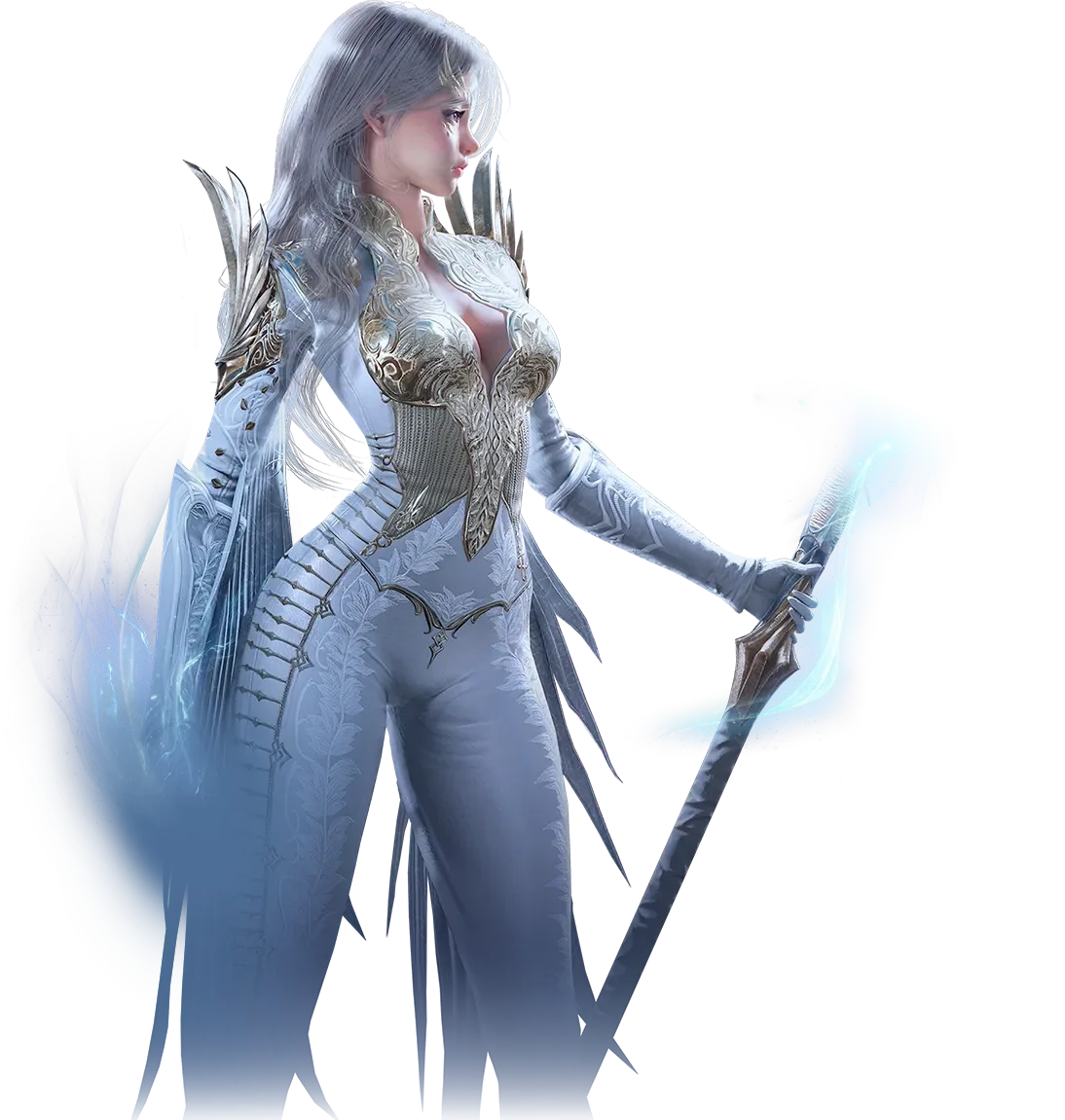
AION 2 has two playable factions: Elyos and Asmodian. Pick the faction your friends are using if you want to share the same open world, story progression, and faction activities. If you are playing alone, choose by homeland, narrative tone, and visual style. Both factions can use the same eight Global launch classes, and there is no supported combat advantage that makes one faction inherently stronger.
Your choice still matters. It determines your homeland, main storyline, home-server options, allies in faction conflict, and opponents in cross-faction PvP. It does not prevent all cooperation with the other side, because instanced group content has different matchmaking boundaries from the open world.
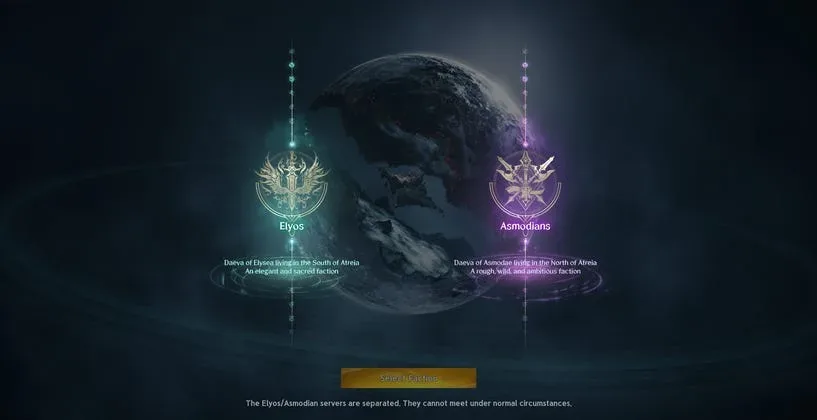
Faction selection is separate from the class you choose for your character.
Elyos and Asmodian Differences at a Glance
| Factor | Elyos | Asmodian |
|---|---|---|
| Homeland | Elysea, the southern half of Atreia | Asmodae, the northern half of Atreia |
| Starting zone | Poeta | Ishalgen |
| Main leveling region | Verteron | Altgard |
| Visual identity | Sunlit, radiant, and elegant | Darker, rugged, and survival-oriented |
| Starting wing appearance | Bright wings | Darker wings |
| Main story | Elyos perspective and homeland campaign | Asmodian perspective and homeland campaign |
| Available classes | All eight Global launch classes | All eight Global launch classes |
| Home server | An Elyos-only server | An Asmodian-only server |
| Faction enemies | Asmodians in shared PvP spaces | Elyos in shared PvP spaces |
The practical differences are therefore concentrated in the world you inhabit and the people around you. You are not selecting a separate class roster, a faction-specific damage bonus, or a different combat system. A Templar, Ranger, Cleric, or any other launch class remains available on either side.
Choose Your Friends Before Your Faction Fantasy
For an organized group, the lowest-regret decision is to agree on three things before anyone settles into a character:
- Choose the same service region. A region is the first boundary for finding the same server and using regional matchmaking.
- Choose the same faction. Elyos and Asmodians have separate homelands, stories, and open-world communities.
- Choose the same home server. Each Global server houses only one faction, so matching the faction without matching the server is not enough for seamless open-world play.
Friends who split between Elyos and Asmodian cannot travel through their normal homeland campaigns together as though they belonged to one side. They will also oppose one another when their servers meet in faction-conflict spaces. They can still encounter a more permissive boundary in supported instanced content, but that exception does not replace sharing a home server.
This makes social coordination more important than speculative power rankings. If your group intends to level together, join the same open-world events, or build a long-term faction community, select the same region, faction, and server from the beginning. Do not assume that choosing similarly named servers on opposite sides will place everyone in one shared homeland.
Solo players have more freedom. Without a fixed group, the durable differences are the environments, campaign perspective, faction identity, and home-server community. Pick the side whose world you would rather see throughout normal exploration instead of trying to predict which faction will dominate every future matchup.
Elyos Homeland and Story Identity
The Elyos come from Elysea, the sunlit southern half of Atreia. Their early route begins in Poeta and continues through Verteron. Their faction presentation favors radiant imagery, brighter wings, and environments commonly described as lush, celestial, or elegant.
That visual language is a theme rather than a combat perk. Selecting Elyos does not grant an exclusive launch class or a verified statistical advantage. It changes the setting in which you begin, the characters and events presented through the Elyos campaign, and the side you represent when the two factions meet as enemies.
Choose Elyos when these priorities fit you:
- You prefer bright landscapes and a radiant faction identity.
- You want to experience the Elyos version of the main story.
- Your friends, Legion, or planned community selected an Elyos server.
- You would rather represent Elyos in the Abyss and other faction-conflict modes.
Do not interpret the polished Elyos presentation as proof that they are the morally correct or mechanically favored side. The two factions present different viewpoints within the same divided world. The useful decision is which perspective and atmosphere you want to inhabit, not which side appears more conventionally heroic at first glance.
Asmodian Homeland and Story Identity
The Asmodians come from Asmodae, the darker northern half of Atreia. Their early route begins in Ishalgen and continues through Altgard. Their presentation emphasizes harsher terrain, darker wings, rugged survival, and a more severe visual mood.
As with Elyos, these qualities establish identity rather than a separate ruleset. Asmodians have access to the same launch classes and core combat mechanics. Their distinctive value is the Asmodian campaign perspective, homeland, faction community, and place in the conflict.
Choose Asmodian when these priorities fit you:
- You prefer darker landscapes and a rugged faction atmosphere.
- You want to follow the Asmodian version of the main story.
- Your friends or intended Legion selected an Asmodian server.
- You want to represent Asmodians in cross-faction conflict.
Community opinions about which campaign or map is prettier are subjective and sometimes draw on the Korean or Taiwan service, the original AION, or prelaunch testing. Those impressions can help you identify an aesthetic preference, but they do not establish a Global power difference. Judge Asmodian by its setting and narrative identity rather than claims that its appearance produces better combat results.
Shared Classes and Combat Capability
Both factions have access to all eight Global launch classes: Gladiator, Templar, Assassin, Ranger, Sorcerer, Spiritmaster, Cleric, and Chanter. You do not need to choose Elyos to unlock one role or Asmodian to unlock another. Your class determines your combat kit and group role; your faction determines the world, story, allies, and enemies surrounding that character.
There is also no reliable basis for an Elyos-versus-Asmodian power tier list. Current Global-focused faction information describes identical combat statistics and mechanics across the two sides. Claims that one faction hits harder, receives better class skills, or has universally superior rewards should not guide character creation unless a later Global update explicitly establishes such a difference.
Keep faction choice separate from class choice:
- Pick a faction for friends, homeland, story, aesthetics, and faction allegiance.
- Pick a class for combat style, role, difficulty, and preferred activities.
Detailed class comparisons and individual builds belong to their dedicated guides. The important faction-level answer is that choosing a side does not remove any of the eight launch classes from consideration.
Character appearance also offers more flexibility than a simple angel-versus-demon label suggests. The factions retain distinct themes and starting wing presentation, but those themes should not be treated as rigid limits on every character you can create. Use the character creator to shape your individual look after choosing the homeland and community you want.
Faction Servers and Matchmaking
Global server structure makes faction selection more concrete than a cosmetic toggle. When entering AION 2, the selection order is region, faction, then an available server for that faction. Every server houses only Elyos or only Asmodians.
Each Elyos server is paired with an Asmodian counterpart for encounters in shared faction modes. A server pairing is not permanent: official matchmaking information says pairings can be updated periodically to help balance the opposing sides. The Asmodian server you face today may therefore be replaced by a different matched opponent later.
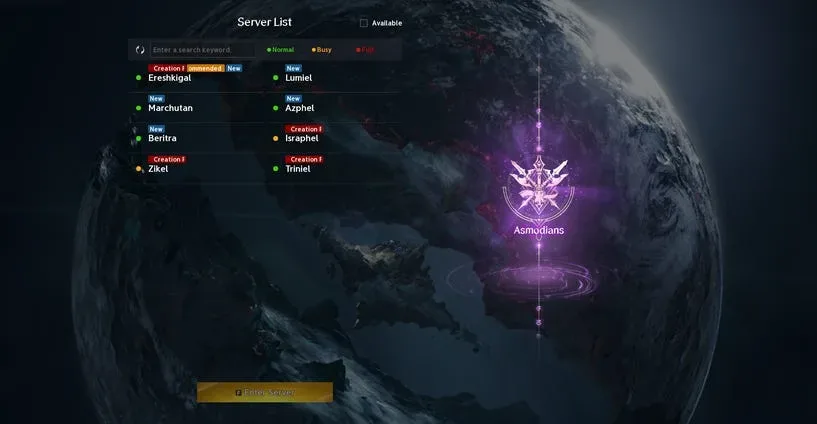
Coordinate service region, faction and home server before creating characters with friends.
This structure creates three separate social boundaries:
- Home-world play: Players need the same region, faction, and server to share the same homeland and normal open-world progression.
- Regional instanced content: Cross-server matchmaking operates within a region, and supported dungeons can include players from the opposing faction.
- Faction-conflict spaces: Paired Elyos and Asmodian servers meet as opponents in activities such as the Abyss and Spacetime Rifts.
Do not choose a faction solely because one currently named opponent appears weak or strong. Pairings can change, and a static server list does not prove current population, activity, or battlefield performance. For exact regional server options, restrictions, and friend-group planning, use the dedicated servers guide rather than relying on an old launch list.
Playing with the Opposing Faction
Faction separation is strongest in the homeland and open world, but it is not an absolute ban on all shared PvE. Current Global guides agree that Elyos and Asmodian players can participate together in supported instanced dungeon content. This means friends who accidentally choose opposite factions may still have some opportunities to play together.
That exception has clear limits. Cross-faction dungeon access does not merge the two campaigns, give both players the same home server, or make them allies in faction PvP. It is better understood as an instanced matchmaking rule than as a universal cross-faction party system.
Use this decision rule:
- If your group mainly wants occasional matched dungeons, opposite factions may not eliminate every chance to cooperate.
- If your group wants to level through the same homeland, explore together, share open-world activities, and fight on the same PvP side, choose the same faction and server.
The second plan offers the least friction. Dungeon matchmaking is useful flexibility, but it should not be the foundation of a group plan that depends on spending most of its time together.
The Abyss, Spacetime Rifts, and Faction Conflict
The Abyss is a shared PvPvE setting where paired Elyos and Asmodian servers meet as enemies. Your faction determines which side you represent. The opposing players encountered there come from the server currently paired with your home server.
Spacetime Rifts create another point of contact by opening temporary routes into opposing territory. They can involve exploration, PvE hunting, and PvP risk. Their presence does not erase the faction boundary; it turns that boundary into part of the activity.
Faction selection therefore matters most when you care about coordinated open-world play or faction conflict. It tells the game who your normal allies are, which homeland belongs to you, and who becomes an opponent in shared competitive spaces. Exact Rift schedules and current pairings can change, so consult their dedicated guides instead of choosing a faction around a single timetable or launch-week matchup.
Balaur Are Not a Third Playable Choice
The Balaur are a draconic force in the wider conflict, but they are not a third playable faction at character creation. Players choose between Elyos and Asmodian. Balaur appear as enemies within the story and PvE rather than as an alternative player homeland.
This distinction matters because AION 2 frequently presents a three-sided world conflict in its lore and encounters. Seeing Elyos, Asmodians, and Balaur named together does not mean the character-creation screen offers three equivalent sides. Your playable decision remains Elyos versus Asmodian.
The Balaur can also threaten both playable factions. That shared enemy role helps explain why faction identity is not a simple good-side-versus-monster-side selection. Elyos and Asmodians are rival player civilizations, while Balaur occupy a different, non-playable position in the conflict.
A Low-Regret Faction Decision
Use this order when making the final choice:
- Match your group. Agree on region, faction, and server before creating long-term characters.
- Choose your preferred homeland. Compare Elysea’s brighter southern setting with Asmodae’s darker northern environment.
- Choose your story perspective. Decide whether the Elyos or Asmodian campaign identity interests you more.
- Choose the faction fantasy. Bright or dark wings, radiant or rugged presentation, and the side you want to represent are valid deciding factors.
- Ignore unsupported power claims. Both sides share the launch class roster, and no supported faction-wide combat advantage establishes a universally better choice.
- Treat server rivalry as changeable. Opposing server pairings can be updated, so do not build a permanent choice around one current matchup.
For a solo player who likes both aesthetics equally, either faction is a reasonable start. For a group, the correct answer is the side everyone can commit to together. The meaningful cost of a split choice is not lost damage; it is losing the shared homeland, story route, home-server community, and common side in faction conflict.
Next Guides
Apply the faction choice during creation and server planning, then understand cross-faction Rift activity.