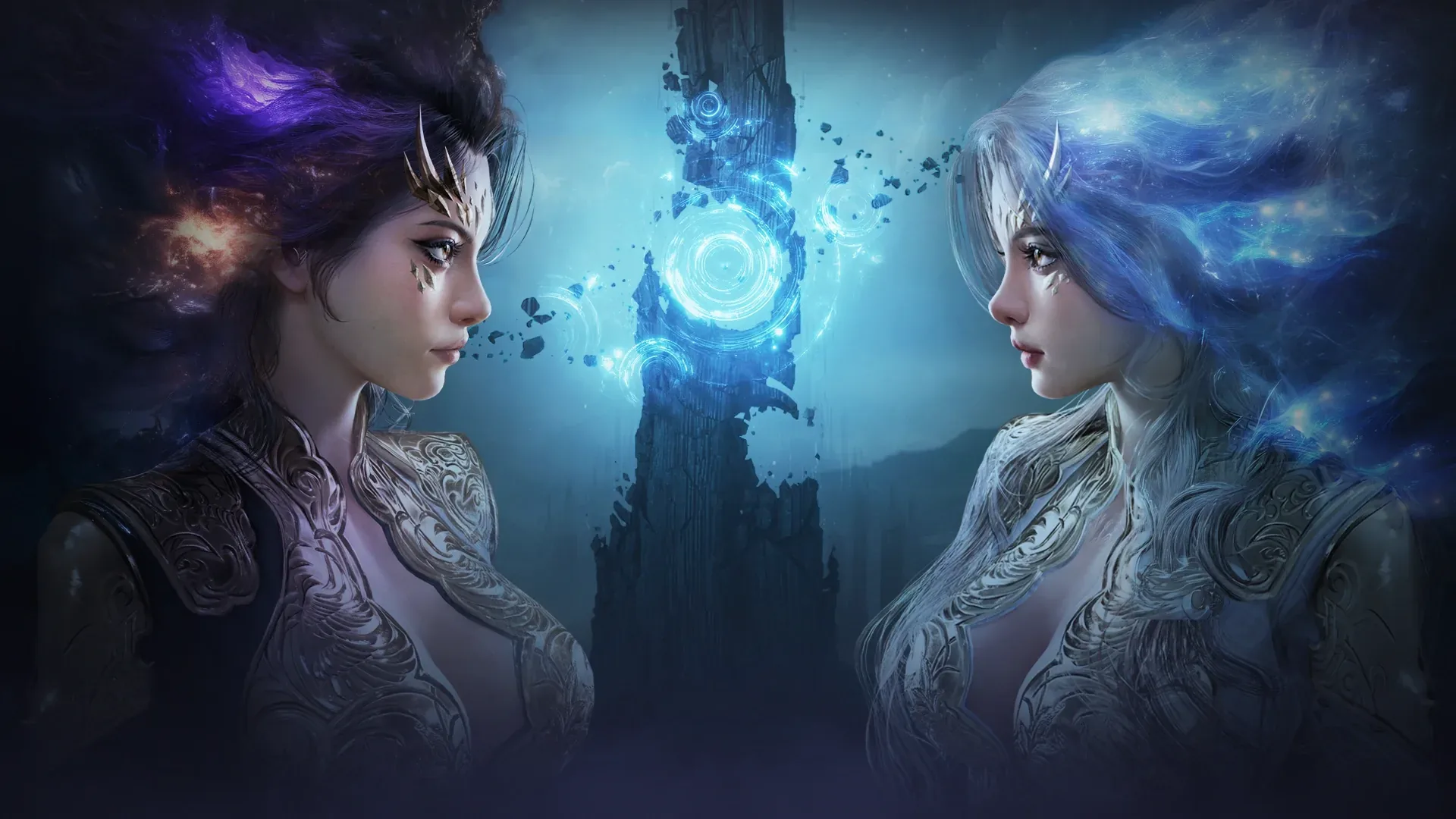
AION 2 is worth trying if you want a visually ambitious action MMORPG built around flight, exploration, character customization, and constant character growth. It is harder to recommend as a long-term commitment if you dislike layered progression, reward limits, paid access to a player economy, or an early leveling experience that can feel surprisingly solitary.
The Global version launched on October 5, 2026, so this remains an early assessment rather than a final verdict on its endgame longevity. Global currently runs on Windows PC through Steam and PURPLE; both clients provide the same content and share servers. It is separate from the older Korean and Taiwanese services, and their later classes, level caps, balance changes, and progression systems should not be treated as Global features.
Review basis: This is not a claimed firsthand playthrough. The judgment below separates confirmed Global product details from attributed launch-period player experiences and editorial observations.
| Decision point | Early Global assessment |
|---|---|
| Best qualities | Beautiful environments, extensive character identity, flight, exploration, satisfying collection goals, and steady early progression |
| Main risks | Solo-heavy leveling, disputed combat depth, PC interface complaints, resource-limited rewards, and a potentially repetitive endgame loop |
| Best audience | Players who enjoy action combat, collecting, gradual power growth, and discovering a large fantasy world |
| Poor fit | Players seeking unrestricted group leveling, a light progression model, or a traditional subscription that includes every economic feature by default |
| Overall verdict | Try it for free, but reach the deeper progression loop before spending or committing to a long grind |
What AION 2 gets right
AION 2 makes an immediate case for itself through presentation. It is a third-person fantasy action MMORPG built with Unreal Engine 5, and praise for its environments appears across both positive and negative player reports. Even players who object to the progression or monetization commonly describe the world as beautiful, with strong animation, skill effects, scenery, and character design.
That visual quality matters because exploration is not merely empty travel between quest markers. Flight gives the terrain a vertical dimension, while feathers, hidden areas, cubes, pets, mounts, and other discoveries provide reasons to look beyond the shortest route. Some players describe wandering through the world as one of the strongest parts of the experience. The repeated concern is not that the world lacks appeal, but that the endgame may eventually give players too few reasons to remain in it instead of moving between instanced activities.
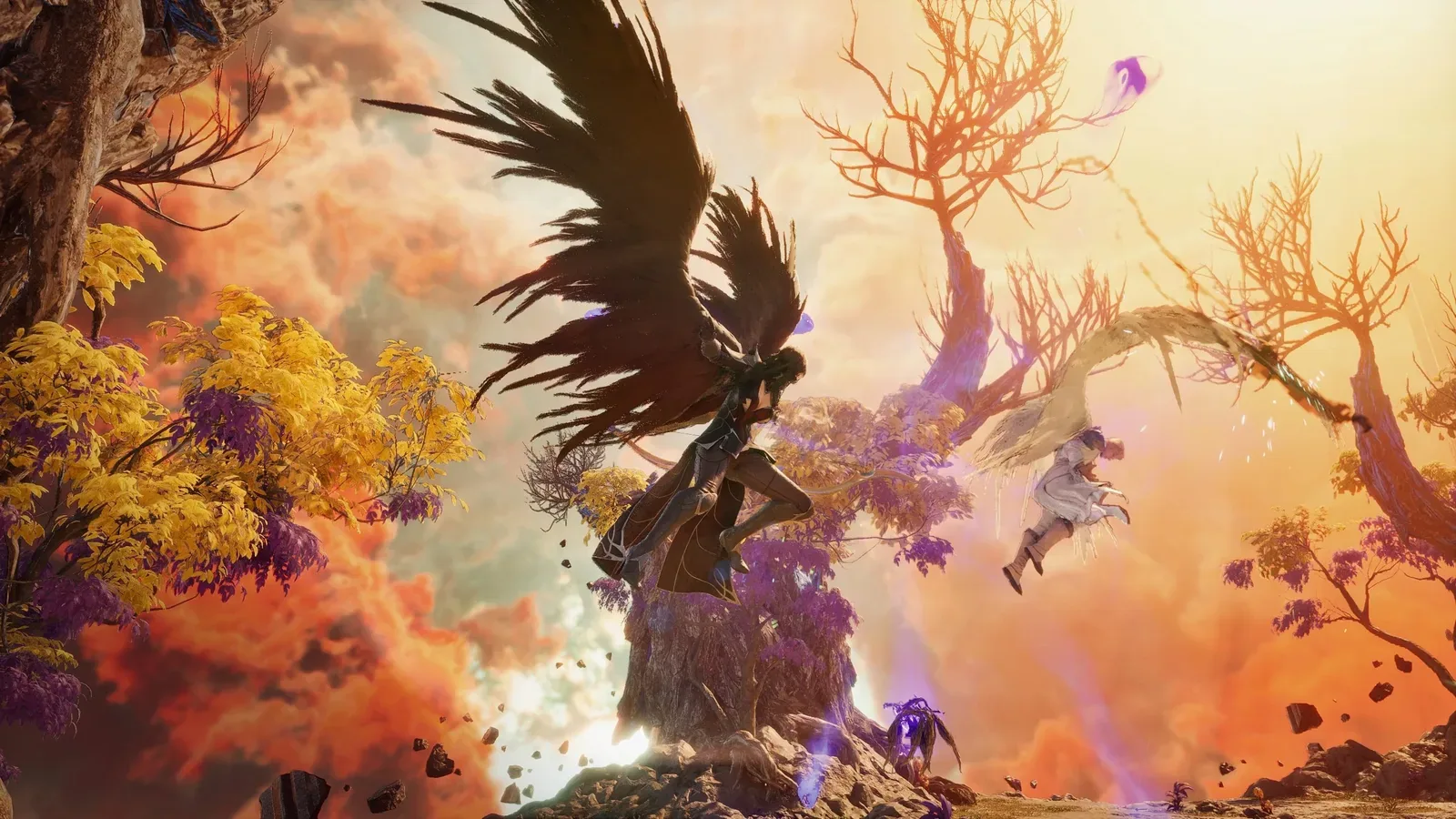
AION 2’s winged traversal makes vertical exploration a central part of the world.
Character identity is another clear strength. Global launches with eight classes: Gladiator, Templar, Assassin, Ranger, Sorcerer, Spiritmaster, Cleric, and Chanter. The character creator offers extensive control over appearance, while equipment appearances, wings, pets, and mounts add longer-term collection goals. Players who enjoy creating a distinctive character may spend meaningful time on appearance before worrying about an optimal build.
The collection systems also reinforce ordinary play. Official product material presents pets as companions with practical functions such as automatic looting, while mounted riding is part of the broader creature-collection appeal. Wings are more than a cosmetic signature because flight affects traversal, exploration, and some combat situations. These systems give AION 2 a recognizable identity instead of making it feel like an MMORPG that happens to include flying.
How combat and progression feel
Combat is active rather than an offline or fully automated system. You choose a class, unlock more skills while leveling, learn its chains, reposition during attacks, and react to encounter mechanics. Flight can also participate in combat. The announced PvE structure includes solo encounters, five-player Expeditions, and a ten-player Sanctuary format, although a described format does not prove that every activity is open on every day or at every point in the current service schedule.
Player opinion on the combat is divided. Supporters say it improves as more skills unlock and class knowledge grows. They like the visual impact, mobility, and the way difficult encounters shift attention from memorizing a huge hotbar to reading attacks and positioning correctly. Critics describe the classes as too similar or too simple, and some dislike skill chaining, macros, automatic consumable use, or other conveniences that remind them of a mobile-oriented design.
That split suggests the combat should be judged after the opening tutorial rather than from its first few minutes. The early sequence introduces controls and systems gradually, so the initial toolset does not represent a developed character. At the same time, players who specifically want highly technical rotations should not assume that later unlocks will transform the game into a fundamentally different combat model.
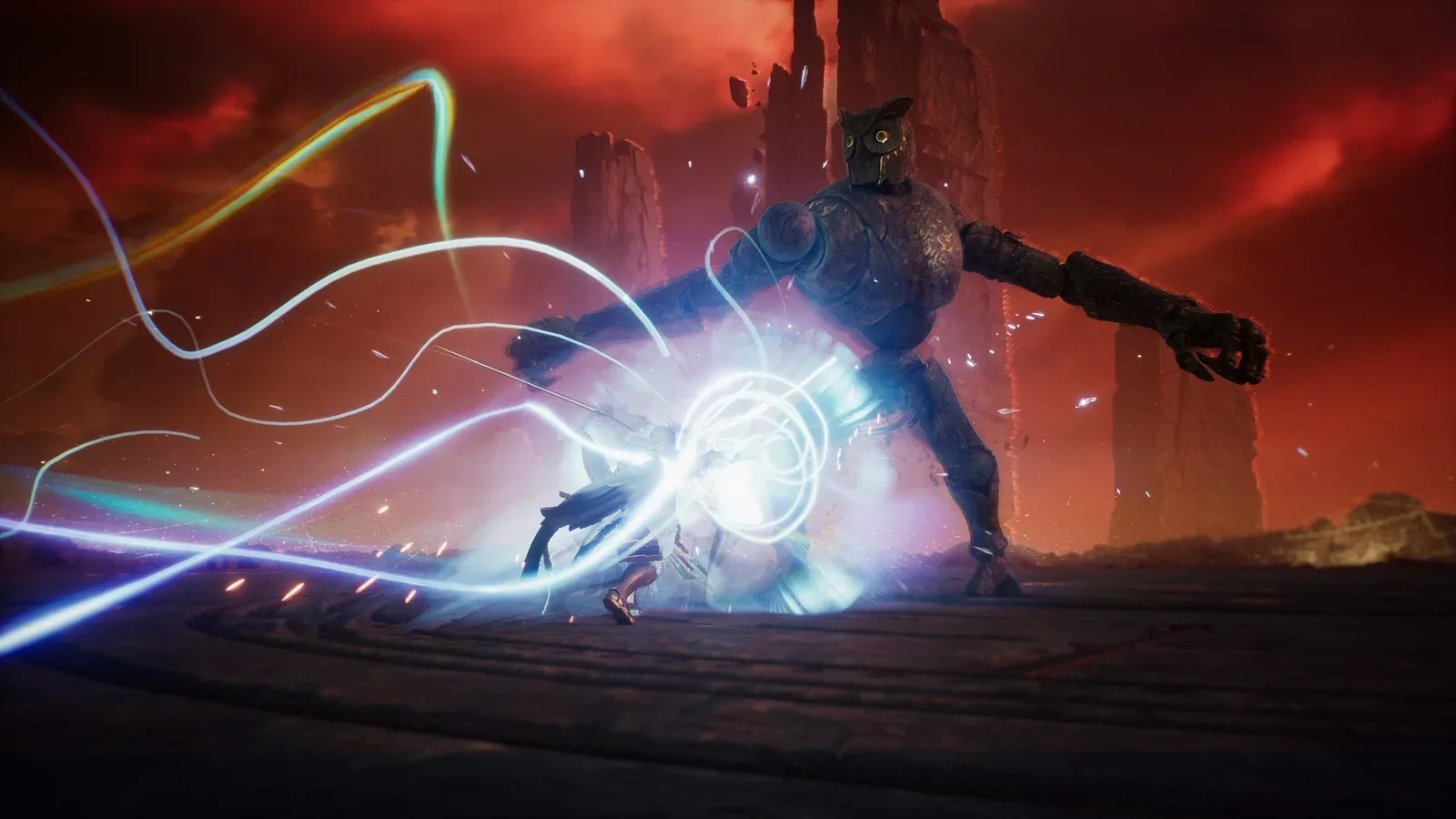
A large-enemy encounter showing AION 2’s combat scale and visual feedback.
Progression supplies the stronger long-term hook. Leveling repeatedly introduces skills, gear, exploration rewards, pets, mounts, and account or character-growth systems. At the Global level cap of 45, advancement continues through equipment and systems such as Daevanion development, Stigma skills, Arcana, and permanent exploration gains. Reaching the cap is therefore the entrance to the deeper progression cycle, not the end of character building.
This creates a dependable “one more improvement” rhythm. A session can advance equipment, unlock a collectible, complete a map objective, or move a character toward another activity threshold. Players who enjoy watching several small systems combine into higher power may find that rhythm compelling. Players who prefer a clean, narrow equipment path may instead see it as information overload.
The eight classes also cover familiar MMO roles without requiring this review to rank them. Templar serves the main tank identity, Cleric supplies traditional healing and resurrection, Chanter blends support with damage, and the remaining choices cover melee, ranged, magical, stealth, and summoned-spirit styles. Class balance and specialized builds belong to current class guides; the useful review-level point is that the launch roster offers recognizable choices without including the later Brawler from another regional version.
Where the experience loses momentum
The largest structural concern is that early AION 2 can feel more like a solo action RPG surrounded by other players than a cooperative MMORPG. Multiple player accounts report that substantial parts of the main quest are individually instanced. Friends may be in the same area or voice chat while still completing objectives separately. Group Expeditions and faction activities exist, but meaningful cooperation may arrive later than groups expect.
That is a poor fit for friends who want to create characters together and share the entire leveling journey. It may suit players who prefer to learn at their own speed before accepting group responsibilities. The official confirmation that the game can be played solo should not be stretched into a promise that every activity can be completed alone; it only establishes that solo play is supported as part of the experience.
The second concern appears after the initial stream of discoveries. Launch-period players repeatedly describe an endgame centered on repeating dungeons, raising gear or combat thresholds, gathering materials, crafting, and unlocking harder versions of familiar activities. Some enjoy that predictable climb. Others say it turns the game into a daily or weekly checklist and makes difficult PvE rewards feel secondary to crafting or broader progression systems.
Odyle Energy is central to many of those complaints because it affects reward collection from dungeon activity. Exact Global costs and regeneration rates should be checked against the current game rather than copied from isolated reviews, but the decision-level issue is clear: being able to enter content and being able to claim the desired progression reward are not necessarily the same thing. If unrestricted dungeon farming is essential to you, verify the live reward rules before treating AION 2 as your main MMO.
Crafting generates similar tension. Player reports describe substantial material requirements and random outcomes, which can make gathering time feel uncertain. The available accounts do not justify turning one example into a universal probability for every recipe, but they do support a broader warning: AION 2 is comfortable using randomness and resource planning as parts of progression. Anyone who dislikes upgrade uncertainty should expect friction.
The social and progression concerns intersect at endgame. Some players report that merely meeting an activity's formal gear threshold does not guarantee acceptance by player-made groups. Permanent bonuses, combat power, experience with mechanics, and community expectations can matter alongside the displayed gear score. That behavior is not universal to every party, but it makes the layered progression more consequential than a single number suggests.
The Global PC experience
Global is a Windows PC release on Steam and PURPLE, not the Korean or Taiwanese mobile service. Even so, several players describe menus, oversized interface elements, automatic conveniences, and interaction patterns as mobile-like. The criticism is mainly about interface philosophy and system presentation, not the graphical quality of the world.
That distinction explains why impressions can sound contradictory. AION 2 can look technically impressive in motion while still feeling awkward in menus. It can require manual combat while retaining convenience features that some PC MMO players associate with mobile design. It can also offer a large open world while using solo instances during important quest moments.
Performance impressions in the available launch discussion are too hardware-specific for a universal judgment. One player reported an attractive and stable experience on conservative automatic settings, while other comments focused on interface responsiveness or uneven cutscene presentation. Treat individual reports as examples rather than a substitute for testing the free client on your own system.
Controller play is another area where wording matters. The official Global FAQ says the game is playable with a controller but not officially supported. That is different from guaranteeing complete controller optimization. Likewise, the current officially supported Global environment is Windows PC through Steam or PURPLE; possible operation on another device is not the same as official support.
The monetization decision
AION 2 is free to enter, but “free to play” does not mean that every system is included without payment. The official Global model includes paid cosmetics, a Battle Pass, and an optional monthly membership tied to access to the player-driven economy and currency exchange. That economic access is significant in an MMORPG built around materials, crafting, gear progression, and long-term character development.
This review does not reduce the entire pay-to-win debate to a yes-or-no label. The more useful distinction is between access and competitive convenience. You can begin leveling, questing, exploring, fighting, and trying the core loop without an entry fee. Paying can still change how you interact with the economy or acquire progression-related resources. Whether that crosses your personal line depends on whether you want a self-contained free experience, long-term market participation, or competitive progression.
Do not buy a Battle Pass, membership, cosmetic, or other upgrade merely because the opening hours are enjoyable. First confirm that you like the post-leveling resource loop, understand which purchase applies to the character or service context you intend to keep, and know what the live store description actually promises. The dedicated free-to-play and monetization guides can cover those boundaries without turning this review into a price list.
The early Global review pattern
The launch conversation is polarized rather than uniformly positive or negative. Positive accounts consistently emphasize the world, customization, flight, collection, visual presentation, and the satisfying pace of early unlocks. Negative accounts often praise those same qualities before objecting to reward limits, repetitive endgame progression, monetized economic access, solo-heavy questing, or PC interface design.
That pattern is more informative than a single score. It suggests that AION 2's basic appeal is real, but its long-term structure is the filter. A player can genuinely enjoy exploration and combat while deciding that the progression economy is not acceptable. Another can dislike the first hour, unlock more abilities, and become invested in the steady flow of upgrades and discoveries.
Highly visible Steam reviews should not be treated as a census of the entire player population. Helpful votes show that readers engaged with a review; they do not establish the percentage of all players who share it. Early editorial enthusiasm also needs context when the reviewer has not yet reached the mature endgame. Both kinds of evidence are useful for identifying repeated strengths and complaints, but neither settles the game's future four days after launch.
Who should try AION 2
AION 2 is a reasonable download for players who:
- Want a modern fantasy world with strong scenery, character art, animation, and effects.
- Like flight as an exploration and combat feature rather than a late-game taxi.
- Enjoy collecting wings, pets, mounts, appearances, and permanent character improvements.
- Prefer action-oriented combat with familiar MMO roles and readable encounter movement.
- Find layered progression satisfying and do not mind learning several connected systems.
- Are willing to test a free game before deciding whether its economy deserves money.
It is a weaker match for players who:
- Want to complete most story content in a synchronized party from the beginning.
- Dislike energy-linked rewards, scheduled activities, crafting randomness, or repeatable progression loops.
- Expect a minimal interface designed only around traditional desktop MMO conventions.
- Want the player market and currency exchange to be unrestricted parts of the free experience.
- Prefer one clear equipment path over many sources of permanent power.
- Need a final, stable judgment on endgame variety rather than an early launch assessment.
The best way to evaluate it
Treat the free entry as a trial of the actual progression model, not just the tutorial. Create the character you genuinely want to play, learn how flight and combat feel, and give the class enough time to unlock a broader set of skills. Explore off the direct quest route at least once, because the world and collection systems are central to the game's appeal.
Then watch for the moment your motivation changes. If discovering places, improving several systems, and preparing for group encounters remains satisfying, AION 2 may suit you. If the growing list of resources and objectives begins to feel like maintenance, that response is more important than the quality of the graphics.
Before paying, examine the current membership, Pass, and store terms inside the live Global service. Decide whether you will stay on the chosen character and service context, whether economic access matters to you, and whether the reward cadence fits the amount of time you want to spend. Avoid importing assumptions from Korean or Taiwanese guides, because Global launched with a modified Season 1 baseline and does not inherit those services' progression.
The early verdict is therefore conditional but clear: AION 2 earns a free trial through its world, flight, customization, combat spectacle, and progression momentum. It has not yet earned an unconditional long-term recommendation because the same progression structure can become restrictive, repetitive, or expensive for the wrong player. Try the core loop, reach its deeper systems, and commit only if the grind itself remains enjoyable.
Next Guides
Examine combat systems, competitive spending, and platform population as separate review inputs.